
Customer Value
How to Track Customer History in a Rental Business (and Actually Use It to Grow)
A rental company tracks customer history by keeping one central record for each customer — lead source, communication history, quote history, rental history, customer type, locations served, review and referral activity, and follow-up status — instead of letting it live across inboxes, phones, spreadsheets, and memory.
Storing that information is only half the job. The value shows up when it's actually used: to follow up at the right moment, recognize a repeat customer, reactivate one who's gone quiet, and turn a completed rental into a review or a referral.
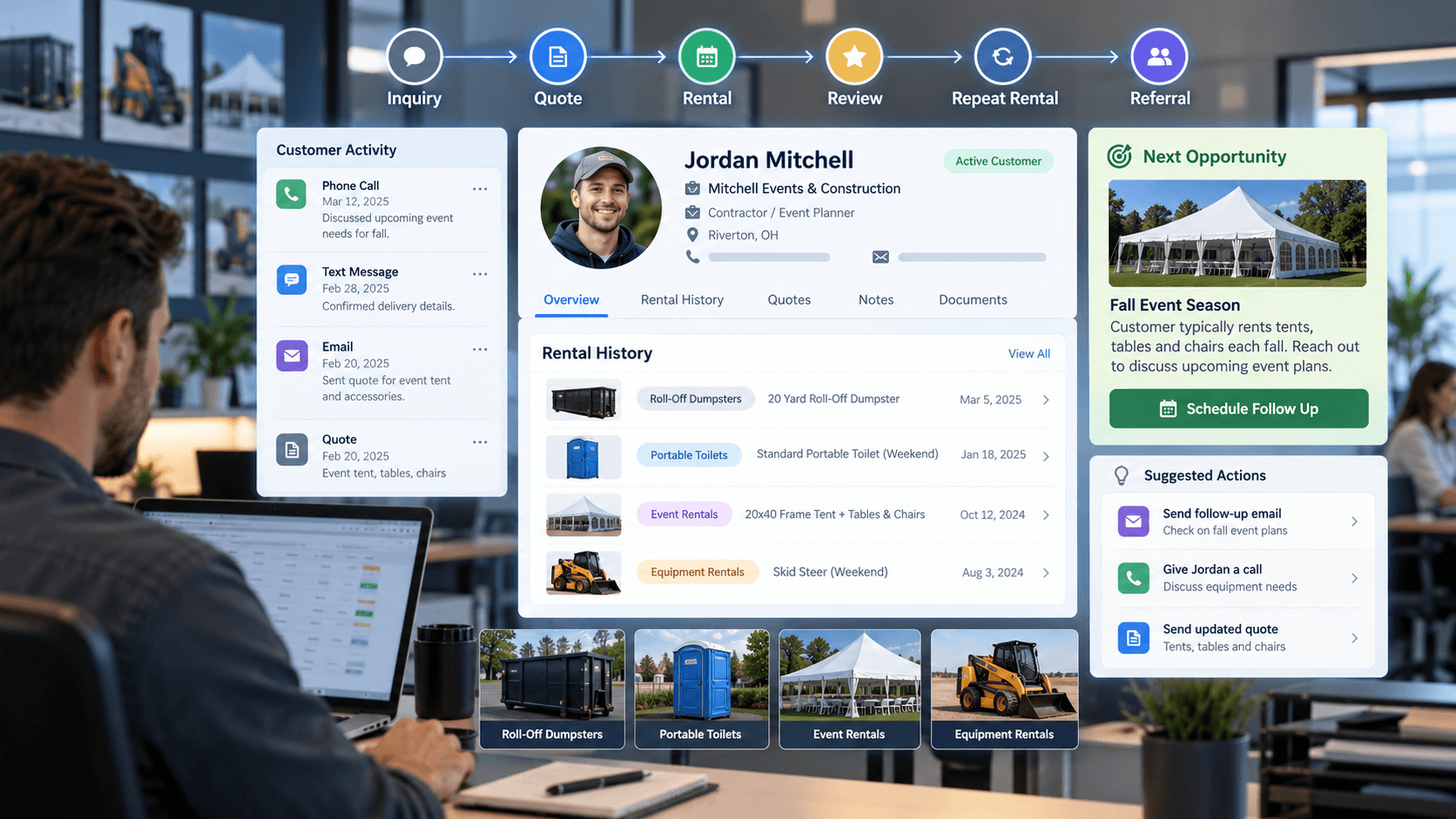
What Does "Customer History" Mean in a Rental Business?
Customer history is the complete relationship between a customer and the rental company — not just the rentals that closed. A full record covers:
- The original inquiry
- Every quote sent
- Calls, texts, and emails
- The booking itself
- Delivery or service details
- The completed rental
- Any review left
- Repeat rentals
- Referrals given or received
- Reactivation attempts
Most rental companies have pieces of this somewhere. Few have all of it in one place where anyone on the team can actually find it.
Why Rental Companies Need a Central Customer Record
When customer information is spread across inboxes, phones, spreadsheets, a booking system, paper notes, and memory, a few predictable problems show up: missed context on a repeat call, inconsistent follow-up, duplicate work, rough handoffs between staff, no easy way to spot a company's best customers, and reactivation opportunities that simply never surface.
If the only person who knows a customer's history is the person who happened to answer the phone, that's not really a customer database — it's one employee's memory with a job title attached.
A spreadsheet can absolutely become a CRM. It usually happens by accident, one added column at a time, until someone finally asks why quote follow-up depends on a tab nobody else knows exists.
The Customer Information Every Rental Company Should Track
Contact information
- Name
- Company
- Phone
Lead source
- Paid ads
- Directory
- Referral
- Repeat customer
- Organic search
- Social
- Partner
Customer type
- Homeowner
- Contractor
- Event planner
- Venue
- Property manager
- Commercial account
- Municipality
Quote history
- Quote date
- Products or services quoted
- Value
- Won or lost
- Reason lost, if known
Rental history
- Rental category
- Unit or equipment type
- Dates
- Location
- Rental duration
- Repeat frequency
Communication history
- Calls
- Texts
- Internal notes
- Follow-up status
Review status
- Review requested
- Review completed
- Platform
Referral history
- Who referred the customer
- Whether the customer has referred others
Reactivation status
- Last contact
- Last rental
- Next follow-up date
- Campaign history
Track the Original Lead Source
Knowing whether a customer came from paid ads, organic search, a directory listing, a referral, a repeat booking, a Google Business Profile view, or a specific campaign makes it possible to see which sources actually produce good customers, not just inquiries.
Attribution doesn't need to be perfect to be useful. A simple, consistently applied source field beats detailed tracking that's too complicated for anyone to actually fill in — even imperfect source data beats guessing after the fact.
Track Quotes — Including the Ones You Lose
A quote history should record what was requested, the quote amount, the outcome, the timing, and the reason lost if it's known. Won quotes are only half the picture.
Lost quotes, tracked consistently, tend to reveal patterns worth noticing: pricing objections showing up repeatedly, capacity issues on certain dates, service-area gaps, follow-up that's arriving too slowly, or a product that's requested more than it's available.
Track What Customers Actually Rent
Product and category history should be specific — a 20-yard dumpster, construction portable toilets, a restroom trailer, a tent and table package, a skid steer, a storage container — not just "rented from us before."
That specificity is what makes the history useful later: it's what lets a follow-up message recommend the right thing, flags a customer as a candidate for reactivation in their actual category, supports a relevant cross-sell, and makes a seasonal reminder feel timed instead of random.
Track Customer Type and Use Case
A contractor, an event planner, a venue, a municipality, a homeowner, and a commercial account all have different rental patterns, different timelines, and different reasons to come back.
Tagging customer type turns a flat list of names into something that can actually be segmented — follow-up and reactivation messaging can speak to a contractor's recurring project needs very differently than a homeowner's one-time cleanout.
Track Communication History
Calls, texts, emails, internal notes, missed calls, promised callbacks, and quote follow-up should all live against the customer record, not scattered across whoever happened to take the call.
The test is simple: can the next employee who picks up this customer understand the relationship without asking the customer to explain it from scratch? If not, the communication history isn't doing its job yet.
Track Reviews and Referrals
Whether a review was requested, whether it was completed, and which platform it landed on are all worth recording — the same goes for whether this customer was referred by someone else, and whether they've referred anyone in return.
This is a direct input into Customer Value Systems: a business that can see who hasn't been asked for a review yet, or who's referred customers in the past, can act on that instead of hoping it happens on its own. (To be clear, this means asking consistently and tracking the outcome — not filtering out unhappy customers before asking, which most platforms treat as a policy violation.)
How to Use Customer History for Follow-Up
A central record turns follow-up from a guessing game into a list of specific, obvious actions:
- A quote went out and got no response
- A rental was completed yesterday
- A customer said "call me next month"
- A contractor rents every few weeks, right on schedule
- An event planner books seasonally, and that season is approaching
CRM tasks and simple automations can turn each of these into a reminder or a scheduled message instead of something a busy owner has to remember on their own.
How to Reactivate Past Rental Customers
Reactivation works best as a segmented list, not a blanket blast. Useful ways to segment past customers include time since their last rental, rental category, customer type, seasonality, location, and rental frequency.
- A contractor who rented dumpsters regularly last year but hasn't booked recently
- A venue that's booked restroom trailers for past events
- An event planner whose busy season is approaching
- An equipment renter with a history of recurring projects
A reactivation message that references what someone actually rented and when reads as relevant. The same message sent to every past customer regardless of fit reads as spam, even when the company behind it genuinely isn't trying to be.
How Customer History Creates More Repeat Business
Historical context lets staff recognize a repeat customer on the first ring, understand what they needed before, make a recommendation that's actually relevant, and avoid starting the conversation from zero. Follow-up also lands at the right moment instead of too early or long after the window has closed.
How Customer History Helps Generate More Reviews and Referrals
A completed-rental status is a natural trigger point — for a review request, a referral request, a thank-you message, or a future check-in. Treating it as an operational step tied to a record, rather than something an owner remembers to do when things are slow, is what makes it actually happen consistently.
How Customer History Improves Lead Source Decisions
With history tracked consistently, a rental company can compare lead sources on more than raw volume — win rate, repeat business, and referral activity by source all become visible. A source that produces fewer leads but more repeat customers may be worth more than one that produces the opposite, without needing a detailed attribution model to see it.
CRM vs. Rental Management Software for Customer History
These two systems solve different problems, and the distinction matters for where customer history actually lives.
CRM
- Relationships
- Sales pipeline
- Communication
- Follow-up
- Reactivation
Rental management software
- Inventory
- Dispatch
- Scheduling
- Contracts
- Equipment availability
- Operational fulfillment
Some companies run both and connect them so customer and job data stay in sync; others consolidate more into one system. For a closer look at choosing the right one, see our guide on what CRM a rental company should use.
What Should a Rental Company Work on First?
Building all of this at once isn't realistic. A practical order:
- Choose one central customer record
- Standardize the required fields
- Track lead source
- Track quote status
- Track rental history
- Track communication
- Add review and referral fields
- Add reactivation dates and tags
- Build simple follow-up workflows
- Review and clean the data regularly
The Bottom Line
The goal isn't to collect more customer data for its own sake. It's to build a clear enough history that the business can respond better, follow up more consistently, recognize repeat opportunities, reactivate past customers, and get more value out of each relationship.
That's the connection between Digital Infrastructure and Customer Value Systems: one builds the record, the other puts it to work. Collecting customer data and never using it is basically digital hoarding — the system only pays off once it's actually driving follow-up, reactivation, and repeat business across the rental categories a company serves.
Frequently Asked Questions
What customer information should a rental company track?
Contact details, lead source, customer type, quote history, rental history, communication history, review status, referral history, and reactivation status. Together these cover the full relationship, not just completed rentals.
How should a rental company track repeat customers?
By keeping rental history tied to a single customer record — category, dates, location, and frequency — so a repeat customer is recognizable the moment they call or submit a new inquiry, rather than treated as new each time.
Should rental companies use a CRM to track customer history?
A CRM is generally the right tool for relationship history — communication, quotes, follow-up, and reactivation — while rental management software typically handles inventory, scheduling, and fulfillment. Many companies use both, sometimes connected to each other.
How can customer history help generate more repeat business?
It lets staff recognize a returning customer immediately, recommend based on what they actually rented before, and follow up at a relevant moment instead of guessing. None of that is possible if the history only exists in one person's memory.
How long should a rental company keep customer records?
Operational retention — how long a company keeps records useful for follow-up and reactivation — is a separate question from legal or accounting retention requirements for formal business records. For the latter, rental companies should follow applicable legal and accounting guidance for their state and business type rather than a general rule of thumb.
Can customer history be used for reactivation campaigns?
Yes, and it's one of the more direct uses for it. Segmenting past customers by time since last rental, category, and customer type makes it possible to send relevant reactivation messages instead of a single generic blast to everyone in the database.
Related Resources
Digital Infrastructure
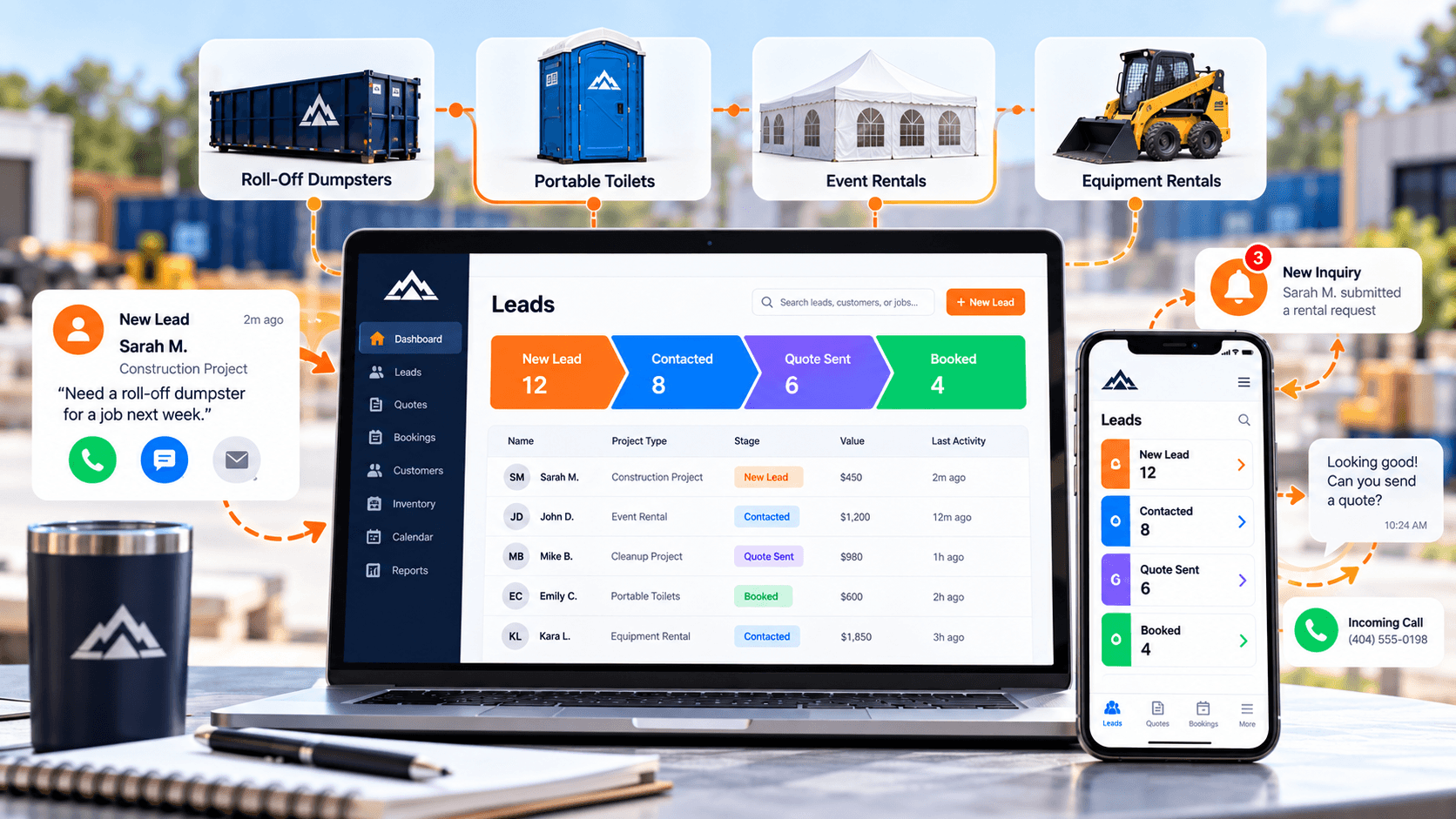
What CRM Should a Rental Company Use? A Practical Guide to Leads, Quotes, Follow-Up, and Repeat Business
What a CRM actually needs to do for a rental company — lead capture, pipeline visibility, follow-up automation, and reactivation — not which brand to buy.
Customer Value
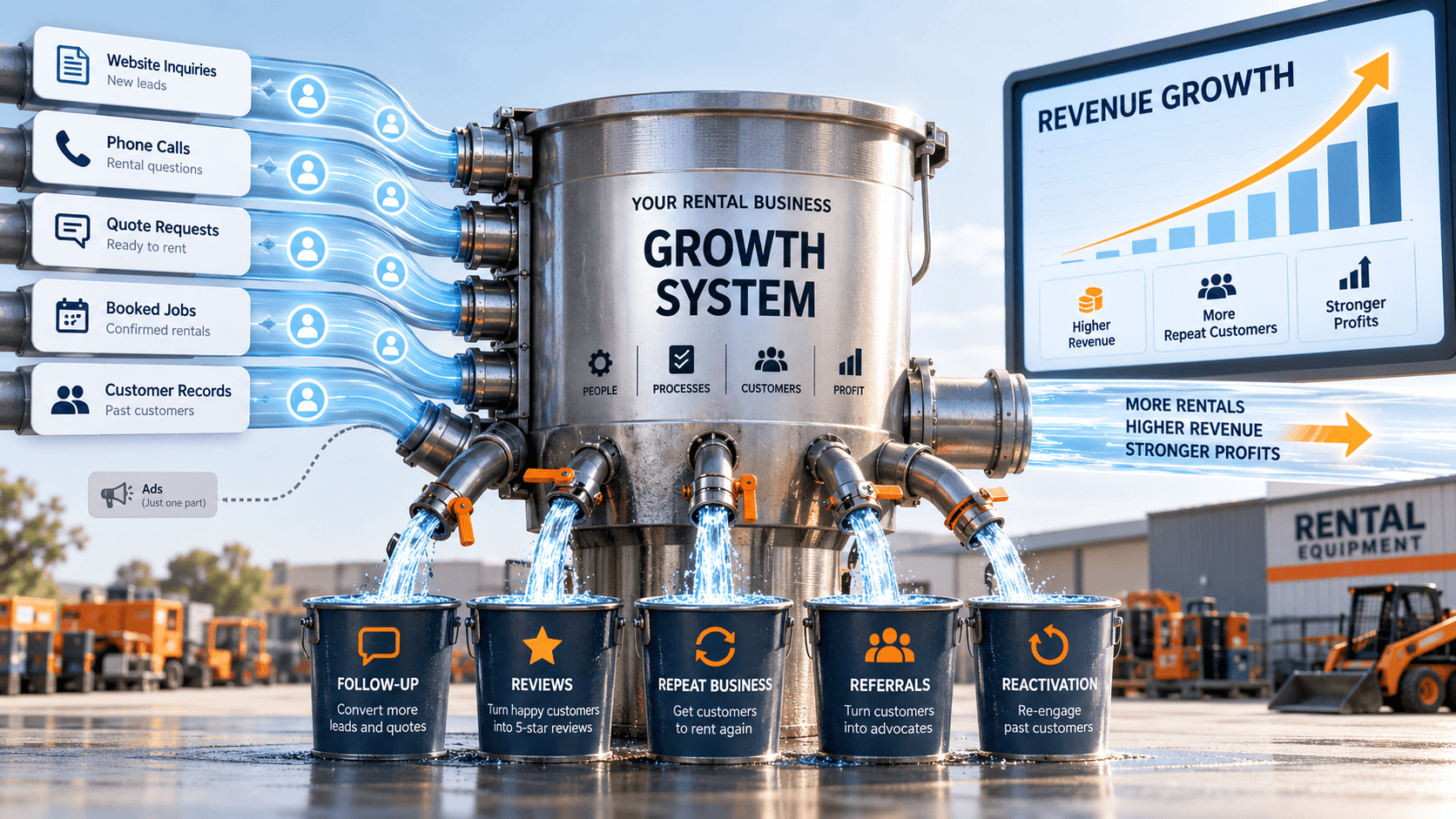
How to Grow a Rental Business Without Spending More on Ads
More ad spend isn't always the answer — here's how rental companies create growth from the leads and customers they already have.

Digital Infrastructure
How Rental Companies Can Improve Speed-to-Lead
In commoditized rental categories, the company that responds first often wins the job. Here's how to shorten your response time.